China has become a major sourcing base for double doors, serving hotels, villas, offices, retail spaces, and public buildings worldwide. Yet a low quotation alone does not identify a reliable supplier. Buyers must examine product evidence, factory capability, and communication quality.
Louis Kahn, a respected architectural thinker, once observed, “The door is not simply a door. It is the beginning of a place.” This idea remains relevant when evaluating Chinese manufacturers. A successful supplier should offer more than attractive panels. It should explain frame construction, hinge capacity, glass options, weather seals, thermal performance, and hardware compatibility. Clear drawings matter. So do sample approvals.
Experienced buyers usually review factory audits, production photographs, test reports, certifications, and previous export projects. They also confirm container loading methods, moisture protection, packaging strength, replacement policies, and realistic lead times. A supplier that answers technical questions precisely often deserves closer attention.
Details reveal professionalism.
However, this process is not flawless. Online catalogs can look impressive, while production quality varies between batches. Some buyers may focus too heavily on price and discover hidden costs after installation. Others may request custom dimensions without checking local building requirements. That mistake can delay an entire project.
This guide examines China’s top double doors suppliers through practical purchasing criteria. It considers materials, customization, quality control, export experience, after-sales support, and communication. The strongest choice may not be the cheapest factory. It is usually the supplier that documents its claims, admits limitations, and consistently delivers doors that perform in real buildings.

Chinese suppliers offer several double-door formats for homes, offices, hotels, and commercial projects. Hinged double doors remain common because they provide a familiar opening movement and strong visual balance. French-style doors suit living rooms, balconies, and interior partitions. Sliding double doors save floor space, especially beside narrow corridors or furniture. They can use glass panels, aluminum frames, or engineered wood.
Bi-fold double doors create a wide opening for patios, showrooms, and meeting spaces. Their panels fold neatly to one side, but the top track needs accurate installation. Pivot double doors create a modern entrance with a central or offset rotation point. They require careful floor support and clearance planning. Security-focused projects may select steel double doors with reinforced cores and multi-point locking systems. Fire-rated versions require verified test documents, not only attractive certificates.
Material selection should match the local climate. Powder-coated aluminum resists moisture, while solid wood needs controlled finishing and maintenance. Low-e glass can improve comfort near sunny windows. A reliable Chinese supplier should provide drawings, hardware schedules, finish samples, and packing details. Ask for the exact frame depth, threshold height, opening direction, and tolerance range.
One detail is often missed. Catalog images can hide uneven floors, weak hinges, or difficult installation conditions. Request a sample corner or full-size mock-up when the project allows it. Small omissions become expensive later. No single double-door type fits every building, and even experienced buyers sometimes underestimate delivery protection.
For global buyers, double doors should be judged by tested performance, not polished photographs.
The U.S. Department of Energy reports that windows, doors, and skylights can cause up to 30% of household heating and cooling energy use. Therefore, inspect U-factor, air leakage, and solar heat gain values before discussing price.
A strong double-door system needs a stable frame, accurate seals, corrosion-resistant hardware, and adjustable hinges.
Look for test evidence under standards such as ASTM E283 for air leakage and ASTM E330 for structural performance.
For insulated glass, request the center-of-glass U-value, not only the marketing label. Low thresholds may improve accessibility, but they can weaken water protection if drainage is poorly designed. This detail is easy to miss.
The UNEP Global Status Report for Buildings and Construction links buildings with roughly 30% of global final energy demand, making thermal performance commercially important.
Tips: Ask for complete test reports, installation tolerances, warranty terms, and replacement-part availability. Check the door after repeated opening cycles. A beautiful handle can still hide weak hardware. Also compare finishes after salt-spray testing, especially for coastal projects. I would not accept a single laboratory result as proof of long-term quality; field installation often changes the outcome. Suppliers should explain glass composition, gasket material, threshold design, and inspection controls in plain English.
A reliable Chinese double door manufacturer should prove capability, not simply display attractive showroom photos. Grand View Research estimated the global doors market at about USD 140.2 billion in 2023, with continued growth expected through 2030. This demand attracts serious factories and inexperienced traders. Buyers should confirm whether the supplier owns production equipment, controls key processes, and exports regularly. Request a current business license, factory address, equipment list, and recent project references. A polished website is not proof.
The ISO Survey 2023 identifies China as the country with the largest number of ISO 9001 certificates. However, certification alone cannot guarantee consistent doors. Check the certificate scope, issuing body, expiry date, and matching factory address. Ask for test reports covering air leakage, water resistance, wind pressure, thermal performance, and security where relevant. Standards such as EN 14351-1 or ASTM testing requirements may apply, depending on the destination. Review drawings carefully. Frame thickness, glass specification, hinge load, finish, and packing details should appear clearly. A factory can pass one audit and still miss a drawing revision. That gap matters.
Tips: Arrange a live factory video call, then compare the production line with submitted photos. Order a sample with your final hardware and finish. Measure diagonals, inspect welds, test the lock, and photograph packaging before shipment. Ask for a pre-shipment inspection by an independent agency. Do not rely only on the lowest quotation. It may exclude installation accessories, export packing, or replacement support. Pricing is useful, but traceable evidence is stronger.
For global buyers, a reliable double-door supplier should provide more than attractive catalog images. Quality begins with controlled materials, accurate fabrication, and documented testing. Ask for frame alloy grades, glass specifications, coating thickness, and hardware cycle results. Small details matter. A 2 mm alignment error can affect sealing, appearance, and installation time.
Suppliers should support relevant regional standards, such as EN or ASTM requirements, based on the destination market. Request recent reports for air leakage, water resistance, wind load, thermal performance, and safety glazing. ISO 9001 certification can indicate process control, but it does not replace product inspection. Review production samples, packing methods, batch records, and pre-shipment photographs. No supplier is flawless. A transparent supplier admits limitations and explains corrective action.
Customization may include height, width, inward or outward opening, aluminum or steel frames, thermal breaks, low-E glass, laminated glass, colors, thresholds, locks, and mosquito screens. Confirm tolerances before production. Measure twice. Also discuss drainage paths, wall conditions, local climate, and installation access. A design that works in a dry coastal city may fail in a cold region with heavy rain. Some buyers focus too heavily on color and forget replacement hardware. That is risky. Clear drawings, sample approval, and a written inspection plan make communication more reliable across languages, time zones, and shipping stages.
| Evaluation Dimension | Common Specification or Option | Typical Global Buyer Requirement | Quality-Control Point |
|---|---|---|---|
| Door Configuration | French, inswing, outswing, rebated, or center-hinged double doors | Select the configuration according to entrance function, local weather exposure, and available clearance | Confirm handing, active leaf, inactive leaf, threshold detail, and opening direction on approved drawings |
| Frame Materials | Aluminum, uPVC, engineered timber, steel, or mixed-material systems | Aluminum and uPVC are commonly selected for low maintenance; timber is used where appearance and insulation are priorities | Check material grade, wall thickness, corner joints, drainage paths, and dimensional stability |
| Standard Door Sizes | Made-to-order sizes; common overall widths are approximately 1,200–2,400 mm | Custom dimensions are frequently required for residential entrances, villas, hotels, and commercial projects | Verify structural opening, frame-to-wall tolerance, sill height, and maximum tested sash dimensions |
| Glazing Options | Single, double, or laminated insulating glass; clear, tinted, frosted, low-emissivity, or decorative glass | Double glazing is commonly chosen for improved thermal and acoustic performance; laminated glass is used where safety or security is important | Check glass thickness, spacer type, seal quality, safety classification, and compliance with destination-market rules |
| Thermal Performance | Thermally broken frames, insulated glass units, warm-edge spacers, and insulated thresholds | Energy performance should be specified by U-value or the relevant local energy code rather than by material name alone | Request product-specific thermal calculations or test reports; do not rely only on generic material claims |
| Air, Water, and Wind Resistance | Performance testing for air leakage, water penetration, and wind-load resistance | Performance level should match the building location, exposure category, height, and local building regulations | Request reports to applicable standards such as EN 14351-1, ASTM E283, ASTM E331, or regional equivalents |
| Security Features | Multi-point locking, reinforced strike plates, security cylinders, laminated glass, and hinge-side protection | Select hardware and glazing based on occupancy type, location, and required security classification | Check lock engagement, cylinder compatibility, hinge adjustment, hardware corrosion resistance, and test evidence |
| Fire and Smoke Requirements | Fire-rated double doors may include certified leaves, frames, seals, glazing, and compatible hardware | Use only where the complete door assembly has been tested and approved for the required fire-resistance period | Confirm the certificate covers the complete assembly, size, glazing, hardware, and installation method |
| Surface Finishes | Powder coating, anodizing, wood-effect coating, paint, stain, or factory-applied protective finish | Color can be matched using recognized color references; coastal and industrial locations may require enhanced coating protection | Check coating thickness, adhesion, color consistency, pretreatment, and resistance to UV and corrosion |
| Threshold and Accessibility | Standard, weathered, low-profile, or accessible thresholds | Low thresholds may support accessibility, but water-management performance must be checked for exposed entrances | Confirm clear opening width, threshold height, drainage, sealing, and compliance with the project accessibility code |
| Hardware Customization | Lever handles, pull handles, hinges, restrictors, closers, panic devices, and access-control preparation | Hardware should be selected for door weight, traffic frequency, climate, security level, and maintenance requirements | Verify load ratings, corrosion class, cycle testing, fixing points, and compatibility with the door profile |
| Acoustic Performance | Laminated acoustic glass, insulated frames, compression seals, and improved perimeter gaskets | Specify the required sound-reduction rating based on traffic, airport, hospitality, or residential conditions | Request laboratory test data for the complete door assembly rather than glass-only data |
| Customization Scope | Size, panel layout, glazing pattern, transom, sidelights, color, hardware, screens, and threshold design | Most project requirements can be defined through approved shop drawings and a signed technical specification | Ensure every option is included in the quotation, drawings, sample approval, and final inspection checklist |
| Quality Documentation | Technical drawings, material declarations, inspection records, test reports, installation instructions, and warranty terms | Documentation should be supplied in English or the project language and should identify the tested product configuration | Check document validity, test scope, product description, revision date, and consistency with the supplied goods |
| Packaging and Export Protection | Protective film, corner guards, foam, moisture control, reinforced cartons, and wooden crates where required | Packaging should reflect transport mode, container loading, humidity exposure, and site-storage conditions | Confirm crate markings, packing lists, inspection photos, moisture protection, and applicable wood-packaging rules |
| Pre-Shipment Verification | Sample approval, dimensional inspection, appearance check, hardware operation, and packaging inspection | Independent or buyer-appointed inspection can be used for higher-value or project-based orders | Record dimensions, finish, glass markings, accessories, quantities, and nonconformities before shipment |
Note: Specifications are indicative buying criteria for international projects. Final performance claims should be verified against product-specific test reports and the building regulations applicable in the destination market.
China Top Double Doors Suppliers for Global Buyers?
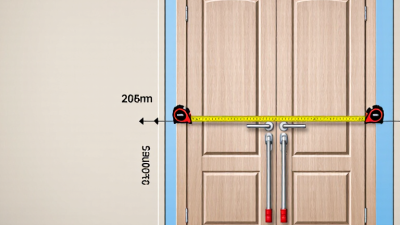
Ordering double doors from China requires more than comparing unit prices. Ask suppliers for verified drawings, frame dimensions, glass specifications, hardware lists, surface-finish samples, and packing photos. Confirm whether the quoted price covers hinges, locks, thresholds, export cartons, and inspection. A small measurement error can make installation expensive. Measure twice.
Use a purchase contract that states tolerances, opening direction, color code, delivery date, inspection method, and replacement obligations. Incoterms 2020 should identify who handles freight, insurance, customs clearance, and unloading. Avoid relying on informal messages alone. Details matter. A pre-shipment inspection can check dimensions, welding, coating quality, and carton labels before payment is completed.
Shipping planning is equally important. UNCTAD reports that more than 80% of global merchandise trade by volume moves by sea, making container scheduling central to international orders. The World Bank’s 2023 Logistics Performance Index gave China a score of 3.7, reflecting strong logistics capability, although port congestion and seasonal delays still occur. Confirm the HS code with a licensed customs broker, and check destination rules for fire performance, glazing, timber packaging, labeling, and building compliance. ISPM 15 treatment may be required for wooden pallets. I have seen buyers focus on factory price, then underestimate inland delivery and destination charges. That calculation deserves a second review.