Doors &
Windows

China Top 10 Aluminum Composite Panel Factories for Buyers

China’s aluminum composite panel industry serves façade, signage, interior, and transport projects worldwide. Buyers now expect more than attractive finishes and competitive prices. They need stable core materials, documented testing, reliable production, and responsive technical support.

Grand View Research reports continued growth in the global aluminum composite panels market through 2030, driven by construction renovation, lightweight façades, and energy-conscious building design. The report also highlights product segmentation by coating, application, and core type. These factors matter when comparing factories. A low quotation may hide differences in coating thickness, aluminum skin quality, or fire performance.

Safety remains critical. EN 13501-1 classifies construction products by reaction to fire, while ASTM E84 evaluates surface flame spread and smoke development. These tests are not interchangeable. Buyers should request complete, traceable reports from recognized laboratories. ISO 9001 certification can also indicate controlled processes, although certification alone proves little about every shipment.

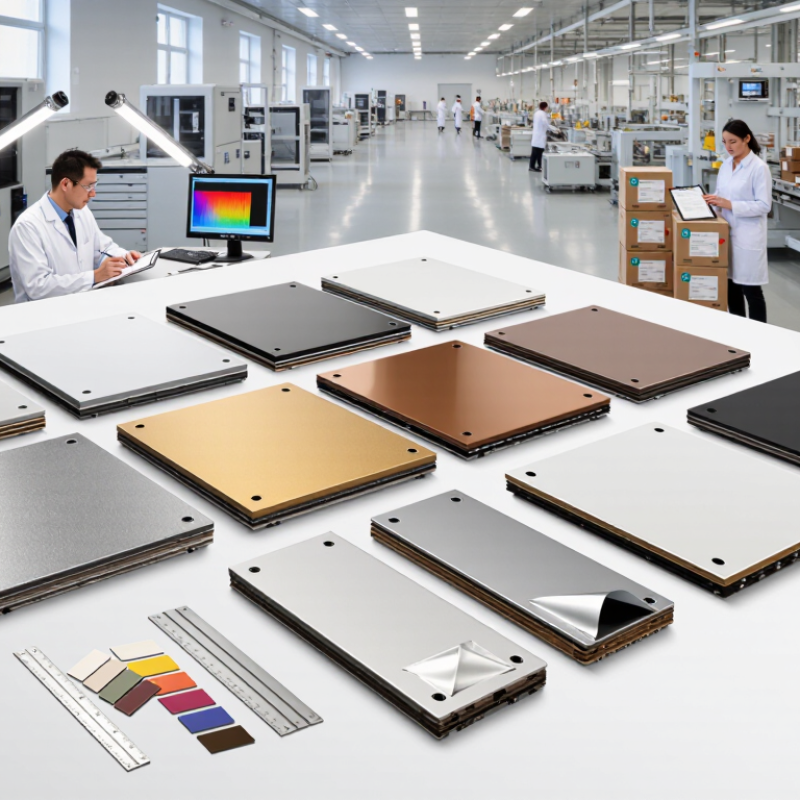
That is why this guide examines China’s top 10 Aluminum Composite Panel Factories through practical buyer criteria. We consider manufacturing scale, coating systems, core options, testing capacity, export experience, customization, and after-sales communication. Sample panels should be checked under real light. Edges, flatness, color consistency, and protective film adhesion often reveal more than a polished catalog.

No shortlist is perfect. Factory information changes, and online claims require verification. A capable Aluminum Composite Panel Factory should provide current certificates, clear specifications, production photos, and transparent lead times. Buyers should compare evidence, not promises. Small details can become expensive problems.
China Top 10 Aluminum Composite Panel Factories for Buyers

What Defines a Leading Aluminum Composite Panel Factory in China

A leading aluminum composite panel factory is defined by process control, not glossy samples. Buyers should inspect coil thickness, alloy certificates, coating records, and core uniformity. The factory should provide traceable batch numbers from incoming aluminum to final packing. According to the International Aluminium Institute, recycling aluminum can save up to 95% of the energy used for primary production. This makes recycled-content records valuable, but only when supported by testing and supplier documentation. Fire performance also matters. Request reports based on recognized standards, such as EN 13501-1 or ASTM E84, rather than trusting general claims.

Production experience appears in small details. Panels should remain flat after cutting, with clean edges and consistent color under daylight. A capable factory checks peel strength, coating thickness, impact resistance, and dimensional tolerance during production. ISO 9001 certification can indicate a documented quality system, but it does not guarantee every shipment is perfect. I have seen excellent certificates paired with weak packaging. That gap deserves attention. No factory is flawless.

Tips: Ask for recent test reports, not old files. Visit the line if possible. Check how panels are stored, labeled, and protected from moisture. Compare three production batches, including one made during a busy period. A reliable factory will explain limitations clearly, even when the answer is inconvenient.

Key Criteria for Evaluating China’s Top Aluminum Composite Panel Manufacturers

China Top 10 Aluminum Composite Panel Factories for Buyers

Choosing among China’s top aluminum composite panel manufacturers requires more than comparing prices. Buyers should examine coating quality, core composition, panel flatness, and production consistency. Request recent test reports, not only attractive samples. Check whether the factory controls aluminum thickness, paint adhesion, color tolerance, and dimensional accuracy during production.

Factory capability matters. Ask about continuous production lines, laboratory equipment, and quality inspection records. A reliable manufacturer should explain its raw material sources and provide clear technical data. Review experience with exterior walls, signage, interiors, or transportation projects. Visit the facility when possible. A clean showroom is helpful, but it cannot replace production evidence. Some factories present excellent samples while shipping ordinary batches. That risk deserves attention.

Tips: Compare at least three samples from different production dates. Test surface hardness, bending performance, and protective film adhesion. Confirm packaging details, loading protection, and lead times in writing. Also check communication speed after the quotation. Slow answers may signal weak project support. Do not judge quality by price alone. A low offer can hide thinner aluminum, unstable color, or limited after-sales service. A common mistake is trusting certificates without checking their scope and validity. Ask practical questions, record every answer, and accept that even a careful evaluation may miss a problem.

Profiles of the Top 10 Aluminum Composite Panel Factories in China

Profiles of the Top 10 Aluminum Composite Panel Factories in China

China’s leading aluminum composite panel factories differ in equipment, product focus, and quality controls. Factory One operates continuous coating lines and serves large commercial projects. Factory Two focuses on fire-resistant panels, using mineral cores and documented laboratory testing. Factory Three produces exterior panels with stable color matching and controlled gloss levels. Factory Four specializes in lightweight panels for signage, shopfronts, and interior walls. Consistency matters.

Factory Five combines automated lamination with strict thickness checks during production. Factory Six offers customized panel sizes, protective films, and carefully packed export shipments. Factory Seven supports curtain wall contractors with fabrication drawings and installation guidance. Factory Eight emphasizes recycled aluminum content, although buyers should verify environmental claims independently. Factory Nine handles small and medium orders, making it practical for trial projects. Factory Ten develops textured finishes, including stone, wood, and metallic effects. Details decide.

A reliable factory should provide technical data sheets, sample panels, coating specifications, and batch records. Buyers can request core density, peel strength, surface flatness, and fire-test documentation. Factory visits may reveal practical weaknesses, such as crowded storage areas or inconsistent film protection. Those details deserve attention. Certifications alone cannot replace production evidence. Lead times also need written confirmation, especially for custom colors and nonstandard thicknesses. I would compare samples under daylight, inspect panel edges, and test packaging before approving a large order. Some rankings rely too heavily on factory scale. That can mislead buyers seeking responsive communication or careful quality control.

China Top 10 Aluminum Composite Panel Factories for Buyers - Profiles of the Top 10 Aluminum Composite Panel Factories in China
Factory Profile Primary Manufacturing Region Typical Product Focus Available Panel Thickness Aluminum Skin Thickness Standard Panel Width Core Options Surface Finishes Common Compliance References Typical Production Capability Typical Export Markets Buyer-Suitable Applications
Factory Profile 01 East China Architectural exterior and interior panels 3–6 mm 0.10–0.50 mm 1,220–1,575 mm PE, FR mineral, and A2 mineral core PVDF, PE, anodized-look, wood-grain, and stone-look ISO 9001-oriented production Continuous coil coating, lamination, cutting, and CNC routing Southeast Asia, the Middle East, Africa, and Latin America Facade cladding, canopy systems, signage, partitions, and shopfitting
Factory Profile 02 South China Fire-retardant and project-specification panels 4–6 mm 0.30–0.50 mm 1,220–1,575 mm FR mineral core and A2 mineral core PVDF, solid color, metallic, and custom color matching Fire-test documentation available by project Batch-based panel production with laboratory quality checks Europe, the Gulf region, Australia, and Southeast Asia High-rise facades, public buildings, transport facilities, and renovation work
Factory Profile 03 Central China Standard commercial panels for distributors 3–4 mm 0.10–0.30 mm 1,220–1,500 mm PE core and standard fire-retardant core PE, matte, gloss, brushed-metal effect, and wood effect Routine incoming and finished-product inspection High-volume standard-size production and container loading Africa, South Asia, Southeast Asia, and domestic China Retail buildings, residential projects, advertising boards, and interiors
Factory Profile 04 North China Weather-resistant exterior cladding panels 4–6 mm 0.30–0.50 mm 1,220–1,575 mm FR mineral core and A2 mineral core PVDF, FEVE-type finish, metallic, and textured finishes Coating and adhesion testing Dedicated exterior-panel coating and lamination lines Central Asia, the Middle East, Eastern Europe, and Africa Building envelopes, curtain-wall infill, parapets, and industrial facades
Factory Profile 05 East China Decorative and digitally printed aluminum composite panels 3–4 mm 0.10–0.30 mm 1,220–1,575 mm PE and FR core options High-gloss, matte, digital print, wood, marble, and custom graphics Color and surface consistency checks Short-run customization, digital printing, and protective-film application North America, Europe, Southeast Asia, and the Middle East Retail interiors, exhibition displays, signboards, furniture, and brand fit-outs
Factory Profile 06 Southwest China Cost-efficient panels for general construction 3–5 mm 0.10–0.30 mm 1,220–1,500 mm PE, recycled-content core, and FR core PE, solid color, gloss, matte, and simple wood-grain finishes Production traceability by batch Flexible production for mixed specifications and distributor orders South Asia, Africa, Southeast Asia, and Latin America Low- and mid-rise buildings, commercial interiors, signage, and partitions
Factory Profile 07 South China Premium architectural finishes and custom colors 3–6 mm 0.20–0.50 mm 1,220–1,575 mm FR mineral, A2 mineral, and PE core Metallic, brushed, mirror, stone, wood, and custom color systems Sample approval before mass production Color-matching laboratory, custom coating, and precision cutting Europe, North America, Australia, and the Middle East Premium facades, hotels, airports, offices, and luxury retail projects
Factory Profile 08 East China Prefabricated facade and fabrication-ready panels 4–6 mm 0.30–0.50 mm 1,220–1,575 mm FR mineral and A2 mineral core PVDF, FEVE-type, anodized-look, and textured finishes Dimensional and flatness inspection Panel fabrication, grooving, folding, drilling, and assembly support Europe, the Middle East, Australia, and Southeast Asia Unitized facade components, column covers, soffits, and complex geometry
Factory Profile 09 North China Cold-climate and industrial building applications 4–6 mm 0.30–0.50 mm 1,220–1,575 mm FR mineral, A2 mineral, and enhanced PE core PVDF, high-durability solid colors, metallic, and stone-look Coating durability and impact checks Heavy-duty panel handling, protective packaging, and export loading Central Asia, Eastern Europe, Russia-region markets, and the Middle East Industrial buildings, warehouses, residential facades, and retrofit projects
Factory Profile 10 Central China OEM and private-label contract manufacturing 3–6 mm 0.10–0.50 mm 1,220–1,575 mm PE, FR mineral, A2 mineral, and customer-specified cores PVDF, PE, matte, gloss, wood, stone, metallic, and custom finishes Pre-shipment inspection supported Flexible minimum order quantities, customized packaging, and mixed containers Global distributor and project markets Distributor programs, contractor supply, signage, interiors, and facade projects

Buyer note: Product thickness, core classification, coating system, color availability, fire performance, minimum order quantity, and export documentation should be confirmed through current technical datasheets, test reports, approved samples, and a pre-shipment inspection.

Comparing Products, Certifications, Capacity, and Export Services

When comparing China’s top aluminum composite panel factories, buyers should examine more than surface finish and quoted price. Panel cores may use polyethylene, fire-retardant mineral material, or recycled content. Ask for coating thickness, alloy grade, peel strength, and dimensional tolerance. A glossy sample proves little.

Certification needs careful checking. The 2023 ISO Survey recorded 1,265,216 ISO 9001 certificates worldwide, but certification alone does not prove stable panel quality. Request the certificate number, issuing body, production scope, and recent audit status. For construction projects, review fire-test reports against EN 13501-1, ASTM E84, or the destination market’s required standard. The test report should match the exact core, coating, and thickness. Small differences matter.

Capacity claims also require evidence. Compare installed lines, monthly output, curing controls, and inspection records. A factory may quote annual capacity, yet export-ready capacity can be much lower during peak seasons. UNCTAD reports that over 80% of global merchandise trade by volume moves by sea, making packaging and logistics essential. Check pallet design, moisture protection, container loading photos, and replacement procedures. Confirm whether the supplier manages cut-to-size orders, mixed colors, documentation, and port delivery. A spreadsheet can still mislead. I would request production records from three recent export orders, then compare promised dates with actual shipping documents.

How International Buyers Can Choose the Right Factory and Place Orders

China Top 10 Aluminum Composite Panel Factories for Buyers

How International Buyers Can Choose the Right Factory and Place Orders

Choosing an aluminum composite panel factory requires more than comparing online prices. Buyers should examine production experience, coating systems, core materials, and export records. Request technical data for aluminum thickness, panel tolerance, surface finish, and fire performance. A reliable factory should provide recent test reports, quality certificates, and traceable batch information.

Ask for physical samples before discussing large orders. Check color consistency, flatness, protective film adhesion, and edge quality under normal lighting. A sample may look excellent while mass production differs. This is where careful inspection matters. Third-party inspection can verify dimensions, packaging, and loading quantities before shipment. Do not rely only on factory photographs.

A clear purchase order prevents expensive misunderstandings. Include panel sizes, colors, coating requirements, packing method, quantity tolerance, delivery date, and agreed trade terms. Confirm the minimum order quantity and replacement process for damaged panels. Payment milestones should match production stages when possible. Ask how the factory handles delays or material changes. Some buyers focus heavily on unit price and overlook container space, protective packaging, or destination handling costs. That approach can fail. Leave room for reasonable adjustments, because project drawings and site conditions sometimes change. Keep every technical promise in written records.