10 Best Decorative Art Tiles for Global Buyers?
Choosing the right Decorative Art Tiles can transform an ordinary wall into a memorable visual statement. For global buyers, beauty is only one part of the decision. Surface texture, color accuracy, durability, packaging, and supplier reliability matter just as much. A hand-painted tile may feature subtle brush marks, while a glazed ceramic piece can reflect light like polished glass. These details influence both design value and practical performance.
This guide examines ten outstanding Decorative Art Tiles for homes, hotels, restaurants, and creative commercial spaces. Each selection is considered through an international buyer’s perspective. We look at material quality, craftsmanship, production consistency, installation needs, and long-term maintenance. Dimensions matter. A small variation can complicate a carefully planned pattern. Shipping protection matters too. Even beautiful tiles lose value when corners arrive chipped.
Experienced buyers should request clear product images, sample pieces, technical specifications, and truthful color references. Supplier communication also reveals expertise. Reliable manufacturers explain firing temperatures, glaze behavior, carton strength, and replacement policies without vague promises. Certifications may be useful, but they should match the destination market and intended application.
No ranking can suit every project. A rustic terracotta tile may feel perfect in a coastal villa, yet appear too uneven in a modern lobby. That is worth remembering. Budget, climate, installation skill, and local building requirements can change the final choice. Some recommendations may still need personal testing, especially when screens distort color and texture. The following list offers practical direction, not a substitute for careful sampling and professional project review.
Understanding Decorative Art Tiles and Their Global Appeal
Understanding Decorative Art Tiles and Their Global Appeal
Decorative art tiles turn walls, floors, and furniture into visual statements. Their appeal crosses borders because patterns can express history, nature, geometry, or local craftsmanship. A hand-painted tile may show slight color variation, while a pressed tile often offers sharper repetition. Neither is automatically better. The right choice depends on the intended space, climate, and maintenance routine. In global sourcing, buyers should examine clay composition, glaze quality, thickness, dimensions, and water absorption. These details affect durability during shipping and daily use. A beautiful tile can still be unsuitable for a wet bathroom or a freezing outdoor wall. That is an easy mistake to make.
Tips: Request clear close-up photos, production samples, and technical specifications before ordering. Check whether colors remain stable under light and whether the surface resists staining. For floors, confirm slip-resistance information. Ask about protective packaging, replacement quantities, and installation guidance. Measurements also deserve attention; a two-millimeter difference can disrupt a repeating layout. Country-specific standards may vary, so buyers should verify requirements with qualified local professionals. Do not rely on decorative images alone.
Global appeal also comes from adaptability. A Mediterranean-style motif may complement a modern kitchen, while a quiet botanical pattern can soften a hotel lobby. Cultural meaning matters, though interpretation can change between regions. Researching symbols prevents careless design choices. Handmade pieces may contain charming imperfections, but excessive warping can create installation problems. The balance is not always obvious. Careful evaluation protects the artistic value and the practical performance of each tile.
Ten Standout Decorative Art Tile Styles for Global Buyers
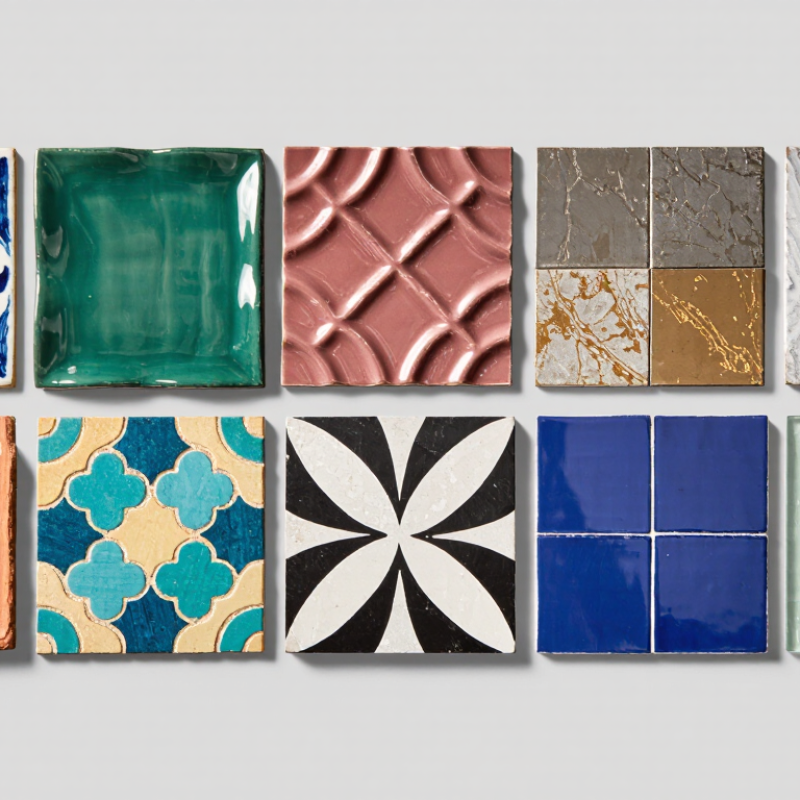
For global buyers, decorative art tiles should balance visual character with dependable performance. Hand-painted botanical tiles bring soft leaves and uneven brushwork to kitchens. Geometric encaustic tiles create rhythm through repeating diamonds, stars, or arches. Raised relief tiles add shadow when light moves across a wall. Glossy mosaic tiles suit narrow borders and small decorative panels. Art Deco tiles use stepped lines, fan shapes, and restrained metallic tones.
The remaining styles offer different moods. Coastal wave tiles resemble rippled water through curved glazing and blue-green layers. Folk narrative tiles can show local plants, animals, or daily scenes in compact images. Terrazzo-effect tiles provide colorful stone fragments without overwhelming a room. Monochrome sculpted tiles rely on texture rather than strong color. Hand-cut irregular tiles create an organic surface with visible edges. Lovely, but less predictable.
Professional buyers should request samples, dimensions, thickness, slip ratings, and cleaning guidance. Check whether colors change under warm or natural light. Handmade tiles may vary slightly in tone, size, and surface level; that variation can be attractive, but it may complicate installation. A practical supplier should provide clear material data, packing details, and honest information about indoor or outdoor suitability. I sometimes favor perfect alignment, yet a small irregularity can make a wall feel more human. Safety still matters more than appearance.
International Buying, Shipping, and Care Considerations
For international buyers, the ten best decorative art tiles combine visual character with dependable handling. Consider hand-painted florals, geometric mosaics, raised reliefs, coastal motifs, cultural patterns, monochrome designs, metallic accents, textured stoneware, illustrated scenes, and custom-sized panels. Ask for exact dimensions, weight, thickness, glaze details, and production photos. Color can shift between screens and daylight. That matters.
Shipping requires more planning than many buyers expect. Request moisture-resistant wrapping, corner protection, and a rigid outer crate. Tiles should not move inside the package. A small gap can become a cracked edge after several transfers. Confirm the shipping method, insurance terms, delivery appointment, and tracking process before payment. Check destination import requirements and estimated duties with the relevant authorities. Sellers should provide accurate invoices and packing details. I once underestimated crate height, and the carrier charged extra handling. That mistake was avoidable.
Tips: Order a sample when possible. Compare it beside your intended wall, not only under showroom lighting. Keep spare tiles for future repairs. After delivery, photograph the unopened crate and every visible defect. Store tiles flat, dry, and away from sudden temperature changes. Use a qualified installer for heavy or uneven pieces, and follow the tile maker’s cleaning instructions. Avoid abrasive pads, harsh acids, and untested sealers. Handmade variation is often part of the artwork, but buyers should still define acceptable differences in writing.
10 Decorative Art Tile Materials: Water Absorption and Care Needs
Water absorption is a practical indicator for international purchasing, shipping, installation, and maintenance. Lower-absorption materials are generally more suitable for wet areas and require less sealing, while porous materials need careful packaging, dry transport conditions, sealing, and routine maintenance. The figures are representative material benchmarks; buyers should confirm the product’s technical test report and applicable EN ISO 10545-3 or ANSI standards before ordering.